How it Works
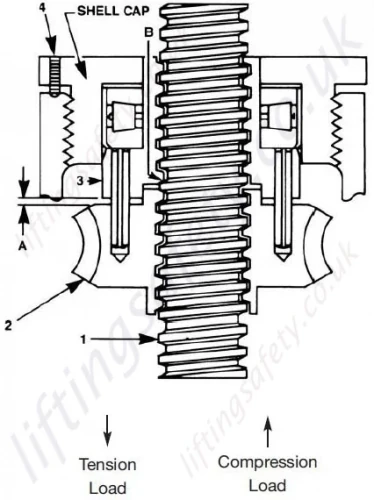
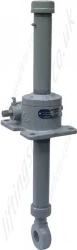
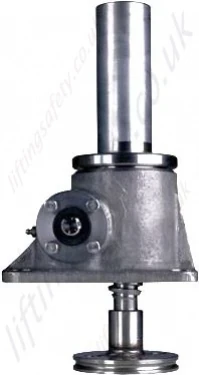
When the screw (1) is under a compression load, the bottom of its thread surfaces are supported by the top thread surfaces of the worm gear (2). The anti-backlash nut (3), being pinned to the worm gear and floating on these pins and being adjusted downwards by the shell cap, forcing its bottom thread surfaces against the upper thread surfaces of the lifting screw at point (B).
Thus backlash between the worm gear threadsand the lifting screw threads is reduced to a regulated minimum.
When wear occurs in the worm gear threads and the anti-backlash nut thread, the load carrting thickness of the worm gear thread will be reduced. This wear will create a gap at point (B) and provide backlash equal to the wear on the threads.
Under a compression load, the lifting screw will no longer be in contact with the lower thread surface of the anti-backlash nut. Under this condition, backlash will be present when a tension load is applied. The anti backlash feature can be maintained simply by adjusting the shell cap until the desired amount of backlash reduction is achieved.
This will reduce the separation (A) between the anti- backlash nut and the worm gear and will reduce the backlash between the worm gear threads and the lifting screw to the desired minimum value.
To avoid binding and excessive wear, do not adjust lifting screw backlash to less than .0005".
When separation (A) has been reduced to zero, the wear limit has been reached.
Replace the worn gear and backlash nut set at this point.
This feature acts as a built in safety device.