Shopping Basket
Your shopping basket is currently empty
Quote Request Basket
Your quote request basket is currently empty
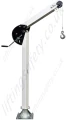
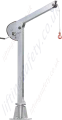
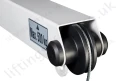
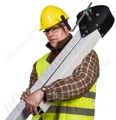
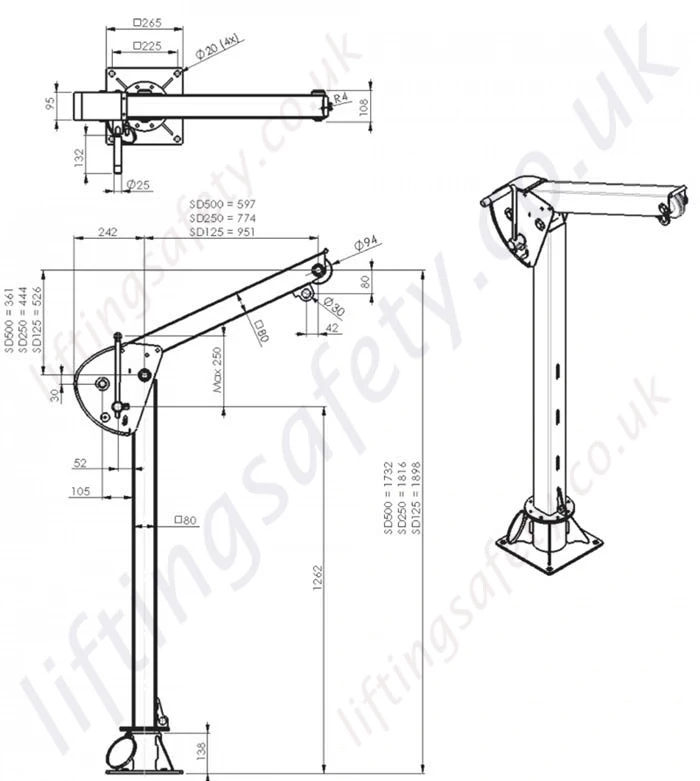
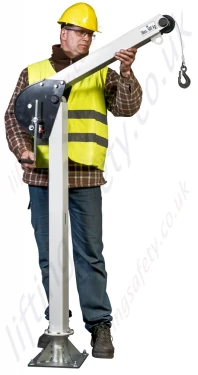
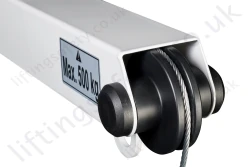
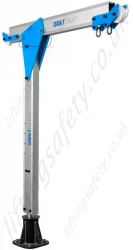
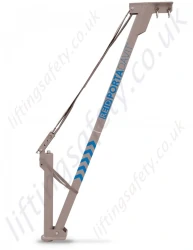
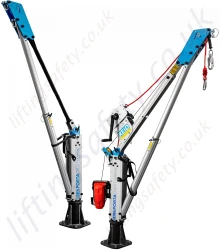
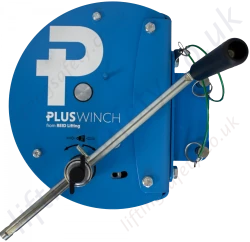
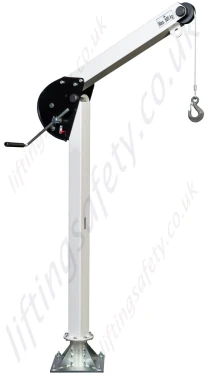
Designed for hoisting goods on location, with a maximum total hoisting capacity of 500kg in the first cable layer. This foldable lifting davit helps you carry out your work effectively without risk of physical overload, according to the latest health and safety act.
| Type | SD125 | SD250 | SD500 |
| Capacity: 1st Cable Layer | 125kg | 250kg | 500kg |
| Capacity: Last Cable Layer (7) | 125kg | 250kg | 268kg |
| Cable Capacity | 24m | 24m | 13m |
| Cable Dia. (EN 12383-4) | 4mm | 4mm | 5mm |
| Min. Breaking Load (Cable) | 9kN | 9kN | 15kN |
| Davit Weight | 25kg | 25kg | 25kg |
| Socket Weight | 7kg | 7kg | 7kg |


Always check the floor socket, the pole, boom and winch on dimensions, dirt, damage or deformation. If necessary, clean and replace the damaged parts.
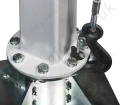
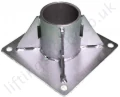
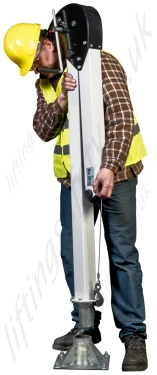
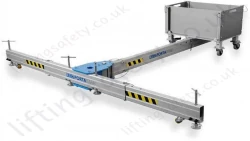
The floor socket can be installed everywhere by means of chemical anchors or standard fixing bolts. Slot the davit in the approved socket, and the check stability (Fig1).
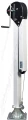
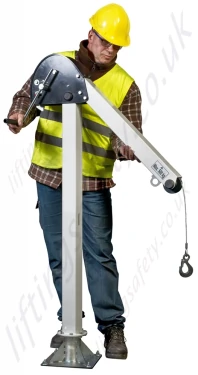
Release the cable by turning the crank counter clockwise. Disassemble the load hook from the hole at the bottom of the pole (Fig 2). Now it is possible to fold out the boom upwards (Fig 3).


Ensure the davit is free from any load.
Wind the winch until the hook is hanging approx. 500mm below the roller / sheave (Fig 4).
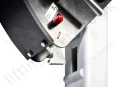
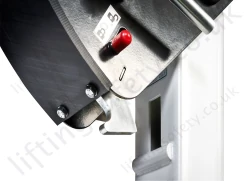
Supporting the boom, push the red pin upwards (Fig 5), and lower the boom gently.
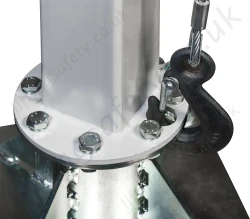
Mount the hook into the securing hole of the davit pole (Fig 6), then apply very slight tension onto the cable by turning the crank clockwise.
The davit can then be removed from the floor socket. Be sure to replace the socket lid to avoid filling with dirt / debris.
If you wish to receive a quote for this product, please use the Pricing section to the right, this form is for general enquiries regarding this product only.
You can also request a quote through the pricing tab!
You can easily add more than one item to the Quote Request. This is highly recommended as we will be able to suit your needs much more efficiently.
Designed for hoisting goods on location, with a maximum total hoisting capacity of 500kg in the first cable layer. This foldable lifting davit helps you carry out your work effectively without risk of physical overload, according to the latest health and safety act.
| Type | SD125 | SD250 | SD500 |
| Capacity: 1st Cable Layer | 125kg | 250kg | 500kg |
| Capacity: Last Cable Layer (7) | 125kg | 250kg | 268kg |
| Cable Capacity | 24m | 24m | 13m |
| Cable Dia. (EN 12383-4) | 4mm | 4mm | 5mm |
| Min. Breaking Load (Cable) | 9kN | 9kN | 15kN |
| Davit Weight | 25kg | 25kg | 25kg |
| Socket Weight | 7kg | 7kg | 7kg |


Always check the floor socket, the pole, boom and winch on dimensions, dirt, damage or deformation. If necessary, clean and replace the damaged parts.
The floor socket can be installed everywhere by means of chemical anchors or standard fixing bolts. Slot the davit in the approved socket, and the check stability (Fig1).
Release the cable by turning the crank counter clockwise. Disassemble the load hook from the hole at the bottom of the pole (Fig 2). Now it is possible to fold out the boom upwards (Fig 3).


Ensure the davit is free from any load.
Wind the winch until the hook is hanging approx. 500mm below the roller / sheave (Fig 4).
Supporting the boom, push the red pin upwards (Fig 5), and lower the boom gently.
Mount the hook into the securing hole of the davit pole (Fig 6), then apply very slight tension onto the cable by turning the crank clockwise.
The davit can then be removed from the floor socket. Be sure to replace the socket lid to avoid filling with dirt / debris.
If you wish to receive a quote for this product, please use the tab, this form is for general enquiries regarding this product only.
You can also request a quote through the pricing tab!
You can easily add more than one item to the Quote Request. This is highly recommended as we will be able to suit your needs much more efficiently.
LiftingSafety uses cookies to improve your user experience.
Find out more