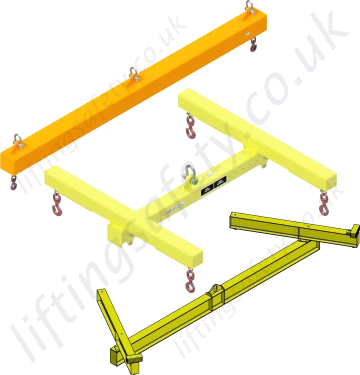
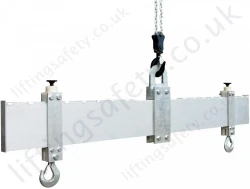
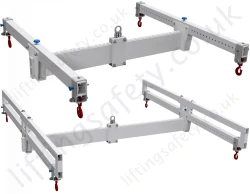
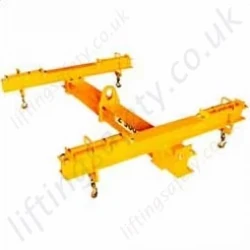
Made-to-Order 2-Point or 4-Point Lifting Beams, Special Designs Available
When tackling complex industrial tasks, standard off-the-shelf lifting equipment simply does not always cut it. For unique operational demands, 4-point lifting beams that are strictly made to order provide unmatched stability, control, and precision. Where the load geometry and lifting plan allow a simpler pick, 2-point lifting beams can also be specified as a made-to-order option, offering a more straightforward rigging arrangement for appropriate loads. With special designs available to suit any project scale, tailored lifting solutions ensure that even the most awkward, oversized loads are handled safely and efficiently on site.
All the lifting beams offered for sale on our website are designed according to each and every individual customer's request/specification and are advertised for illustration purposes only. We will ensure that drawings for approval will be issued upon receipt of your order.
Lifting and spreader beams are individually designed to the customer's requirements and for a wide variety of applications, including a customer-specified safe working load and dimensions, painted or galvanised for marine and offshore use, with adjustable centre of gravity and with anti-sparking (spark-resistant) features. All lifting beams are supplied CE certified.
Lifting Beams vs. Spreader Frames: Making the Right Choice
Before investing in new gear for heavy lifting, it is vital to fully understand the difference between spreader bars and lifting beams. A spreader bar uses top rigging to handle compressive forces, whereas a lifting beam takes on the bending stresses directly, requiring significantly less headroom.
When evaluating lifting beam vs spreader frame advantages, consider your specific workspace and load type. For instance, custom heavy-duty spreader frames often excel in providing maximum stability for wide, fragile loads by distributing the weight evenly across a larger footprint. Conversely, lifting beams remain the ideal choice for indoor environments or facilities with heavily restricted vertical clearance.
Tailored Solutions for Complex Loads
Designing bespoke lifting attachments is absolutely crucial when dealing with asymmetrical or top-heavy objects. Lifting unbalanced loads safely requires precise engineering rather than guesswork. By opting for adjustable four-point spreader frames or robust beams featuring adjustable lifting points for variable load sizes, crane or hoist operators gain the exact flexibility needed to handle diverse materials without swapping out gear for every lift.
For more uniform loads with suitable lifting points, a 2-point lifting beam may be engineered to the same duty rating and interface requirements, while a 4-point lifting beam is typically preferred when the lift plan benefits from additional restraint and control.
Here are practical tips to ensure your overhead lifts are executed flawlessly:
- Calculate thoroughly: Knowing exactly how to determine lifting beam capacity involves accounting for the total weight of the load, the rigging tackle, and potential dynamic forces during movement.
- Find the perfect balance: Proper centre of gravity alignment in overhead lifting is non-negotiable. Pinpointing this sweet spot ensures optimal load distribution, effectively preventing load tilting with 4-point rigging.
- Choose the right accessories: Meticulously selecting rigging hardware for overhead lifts, such as shackles, hooks, and slings, guarantees that your entire system functions cohesively and safely.
Uncompromising Safety and Manufacturing Standards
When commissioning custom gear, adherence to rigorous industrial safety codes is paramount. Our lifting beams are manufactured to a high standard, providing peace of mind through strict adherence to LOLER and BS EN 13155.
To guarantee long-term reliability and safety in the field, stringent engineered lifting equipment safety factors are built into every bespoke design. Furthermore, subjecting the final product to non-destructive testing for custom gear, such as magnetic particle inspection, confirms hidden structural integrity without compromising the equipment itself.
Ultimately, investing in a purpose-built, 2-point or 4-point lifting system creates a safer, vastly more efficient work environment. By thoroughly assessing your load requirements and partnering with specialists who fabricate to exact specifications, you secure a reliable asset designed precisely for your operational success.