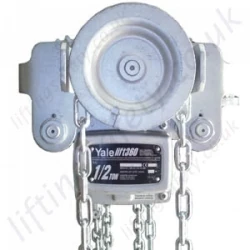
Atex regulations as follows: The Atex directive on “use” refers to the DSEAR Regulations 2002 requires employers to protect workers from the risk of explosive atmospheres. An explosive atmosphere is defined as a mixture with air, under atmospheric conditions, of dangerous substances in the form of gases, vapours, mist or dust in which after ignition has occurred, combustion spreads to the entire unburned mixture. The Atex directive on “Product” refers to Directive 94/9/EC (ATEX 95) Equipment and Protective Systems for use in potentially explosive atmospheres. Covers electrical and non-electrical products intended for use in hazardous areas (gas, vapours or dust atmospheres) ATEX 95 implemented in the UK as: The Equipment and Protective Systems Intended for USE in Potentially Explosive Atmospheres Regulations 1996 Statutory Instrument 1996 No. 192.
Relevant EN Standards for potentially explosive areas of work
- EN 60079-17 Inspection and maintenance of electrical installations in hazardous areas (other than mines).
- EN 60079-10 Classification of Hazardous areas (Gas).
- EN 60079-14 Electrical Installations in Hazardous areas (other than mines)
- EN 60079-19 Repair and overhaul for apparatus used in explosive atmosphere (other than mines)
- EN 61241-3 Classification of areas where combustible dusts are or may be present.
- EN 1127-1 Explosion Prevention and Protection Basic concepts and methodology.
DSEAR (Dangerous Substances & Explosive Atmosphere Regulations) applies to all dangerous substances at nearly every business in Great Britain and gives the least requirements for protecting employees from fire and “explosion risks”, “dangerous substances” & “potentially explosive” atmospheres.
The main requirement are given below (summary).
- A risk assessment of any work place when dangerous substances are involved (potentially explosive)
- Eliminate or reduce to (as is reasonably practical) by the use of technical and organisational measures all of the Identified risks in potentially explosive areas or work
- Anti sparking, spark proof Equipment and other equipment should be provided by the employer and procedures documented to deal with accidents and emergencies before commencing work
- Training shall be provided to all employees to ensure that they are competent in all aspects of work including the use of Atex hoists and other items of Atex lifting equipment, Always follow the manufacturer’s operation user manual on safe use and maintenance.
- Classify places, areas at the work place where explosive atmospheres may occur (Inc potentially explosive areas) into zones, and mark the zones where necessary.
The Dangerous Substances & Explosive Atmosphere Regulations applies whenever there is work being carried out by an employer or self-employed person or a dangerous substance is present or liable to be present at the workplace or if the dangerous substance presents a risk to the safety of persons (as opposed to a risk to health). The warning signs for places where explosive atmospheres may occur (Distinctive features) are a Triangular shape and black letters on yellow background with black edging (the yellow part to take at least 50% of the area of the sign).
ATEX & Intrinsic Safety Information - Explosive Atmospheres
Protection Concepts
| ZONE |
HAZARD |
PROTECTION CONCEPTS |
| 0 |
In which an explosive gas/air mixture is continuously present for long periods |
Exia or Exs |
| 1 |
In which an explosive gas/air mixture is likely to occur in normal operation. |
Exd. Exe, Exib, Exp, Exia, Exs |
| 2 |
In which an explosive gas/air mixture is not likely to occur in normal operation. |
All concepts suitable for Zone 0 & 1, ExN, ExO and Exq |
Standards For Methods Of Protection
| METHOD OF PROTECTION |
PERMITTED ZONE OF USE IN UK |
CODE LETTER IEC, EX.., CENELEC, EEX |
| General requirement |
- |
- |
| Oil immersion |
2 |
o |
| Pressurisation |
1 or 2 |
p |
| Powder filling |
2 |
q |
| Flameproof |
1 or 2 |
d |
| Increased safety |
1 or 2 |
e |
| Intrinsic safety |
* 0, 1 or 2 |
ia or ib |
| Non-incendive |
2 |
n # |
| Encapsulation |
1 or 2 |
m |
| Special |
1 or 2 |
s |
| * ia: Zone 0,1,2. ib: Zone 1,2. not Zone 0. # n: used locally in UK. |
Gas Grouping and Temperature Classification
| Gas Grouping |
|
Temperature Classification |
| GAS # GROUP CENELEC EN 50 014, IEC |
REPRESENTATIVE GAS |
T Class / IEC 79-7 |
Max. surface temp ° C |
| I * (mining) |
Methane |
T1 |
450 ° C |
| IIA |
Propane |
T2 |
300 ° C |
| IIB |
Ethylene |
T3 |
200 ° C |
| IIC |
Hydrogen |
T4 |
135 ° C |
| |
T5 |
100 ° C |
| T6 |
85 ° C |
Certification Code
(CENELEC marking information - example [EEx ia] IIC T4)
| [ |
E |
Ex |
ia |
] |
IIC |
T4 |
| Associated apparatus* |
Certified to the CENELEC standard |
Explosion protected |
Protection concept (IS) |
Associated apparatus* |
Apparatus group (gas group) |
Temperature classification (not Gp I) |
| * (located in safe area and may be connected to hazardous area) |
Device Group & Category
| DEVICE GROUP |
DEVICE CATEGORY |
ZONE |
| I |
M = mining |
– |
| Mining |
M 1 |
– |
| Pit gas &/or flammable dusts |
M 2 |
– |
| II |
G = gas |
|
| Other areas |
1 G |
0, 1, 2 |
| Explosive atmosphere |
2 G |
1, 2 |
| |
3 G |
2 |
| D is added after G in the certification class number |
D = dust |
|
| (i.e. GD) if device is dust category approved also |
1 D |
20, 21, 22 |
| |
2 D |
21, 22 |
| |
3 D |
22 |
|
Explanation of the categories:
- Very high safety = device safety must be guaranteed even in case of rare device failures, e.g. simultaneous failure of two components.
- High safety = device safety must be guaranteed if frequent failures can be expected, e.g. failure of one component.
- Safe in normal operation = device safety must be guaranteed in normal operation.
Note: A number in brackets before device category designation signifies that the device meets the requirements of an additional category to the main one that is specified.
Example: II (1) 2G signifies that the device meets requirements for both 1 G and 2 G categories
|
Characteristics of Substances
Flashpoint
This is the lowest temperature at which a liquid generates sufficient vapour to support ignition. This vapour can be ignited in many ways including temperature or energy (i.e. a spark)
Ignition Temperature
This is the lowest temperature at which the vapour will be ignited.
This defines the temperature class.
Classification of maximum surface temperatures of electrical apparatus (CENELEC)
| Temp. Class |
Max. Surface Temp. |
| T1 |
<450ºC |
| T2 |
<300ºC |
| T3 |
<200ºC |
| T4 |
<135ºC |
| T5 |
<100ºC |
| T6 |
<85ºC |
Apparatus Group (energy ignition)
All surface industry gases/vapours are classed as Group II gases.
Group II is divided into 3 sub groups:
- IIA – High energy is required to ignite. Less intense explosion. (Propane)
- IIB – Less energy is required to ignite. More intense explosion. (Ethylene)
- IIC – Little energy is required to ignite. Most intense explosion. (Hydrogen)
Characteristics of some common flammable materials
| Gas/Vapour |
Flashpoint |
Gas Group |
Ignition Temp. |
Temp. Class |
| Acetone |
19ºC |
IIA |
535ºC |
T1 |
| Butane |
-60ºC |
IIA |
365ºC |
T2 |
| Heptane |
-4C |
IIA |
215ºC |
T3 |
| Ethyl Methyl Ether |
37ºC |
IIB |
190ºC |
T4 |
Note: There is no connection between ignition energy and ignition temperature
The information offered by LiftingSafety is guidance only. For detailed information see the relevant directives and regulations.